
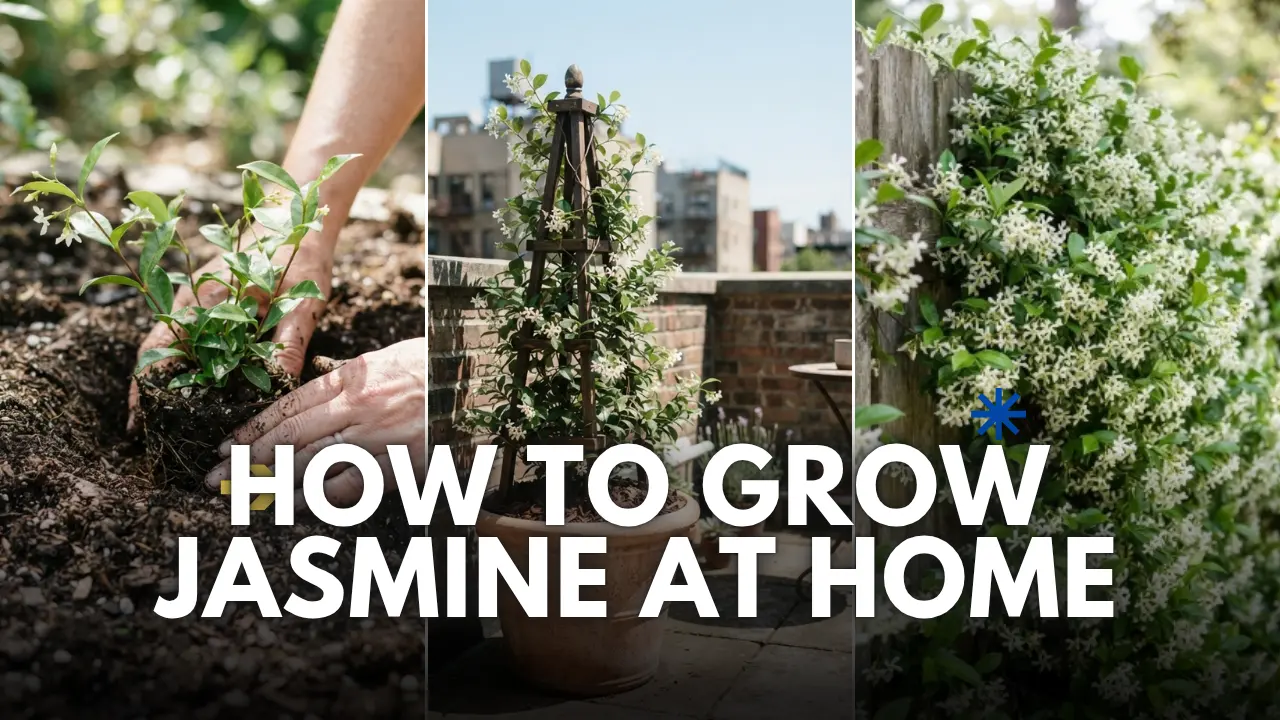
If you’ve ever walked past a fence covered in small white flowers and stopped because of how good it smelled, there’s a good chance it was star jasmine. It’s one of those plants that does double duty glossy green leaves all year and a serious wave of fragrant blooms in late spring and summer. The best part is you don’t need a big yard or fancy tools to grow it. Whether you’ve got a garden bed, a trellis, or just a pot on your balcony, star jasmine is easier to grow at home than most people expect. Here’s exactly how to do it.
What Is Star Jasmine, Exactly
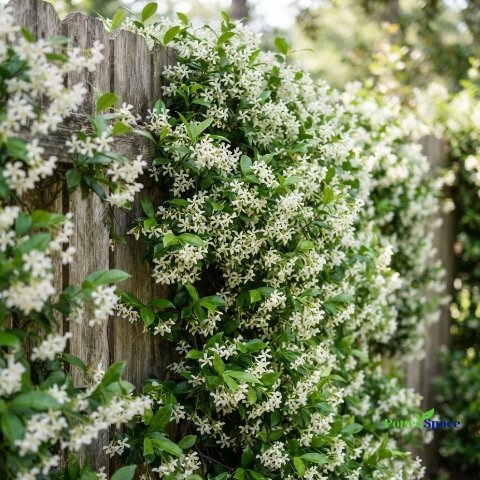
Star jasmine (Trachelospermum jasminoides) isn’t actually a true jasmine, but it earned the name for its sweet scent and star-shaped white flowers. It’s an evergreen vine, which means you get greenery on your fence, wall, or trellis all year round, not just during bloom season. It grows at a manageable pace, climbs by twining rather than needing to be tied constantly, and once it’s established, it’s genuinely low maintenance. This makes it a favorite for covering fences, softening bare walls, or filling in a trellis near a patio where you’ll actually enjoy the fragrance.
Choosing the Right Spot to Plant It
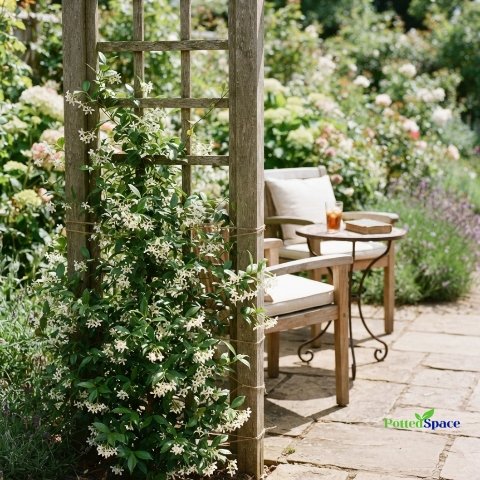
Star jasmine does best with at least six hours of sunlight a day, though it can tolerate partial shade, especially in hotter climates where a little afternoon relief actually helps. Pick a spot with something for it to climb — a trellis, fence, or arbor — since this plant wants to grow upward and outward. If you’re planting near a patio, seating area, or bedroom window, you’ll get the most enjoyment out of the fragrance during bloom season. Good air circulation around the plant also helps keep pests and fungal issues to a minimum.
Best Soil for Star Jasmine
This plant isn’t overly picky, but it does best in well-draining soil with a bit of organic matter mixed in. Heavy clay soil that holds water for long periods can lead to root rot, so if that’s what you’re working with, mix in compost or coarse sand before planting to improve drainage. A slightly acidic to neutral pH is ideal. If you’re growing it in a container, use a standard well-draining potting mix rather than garden soil, which tends to compact and hold too much moisture in a pot.
How to Plant Star Jasmine
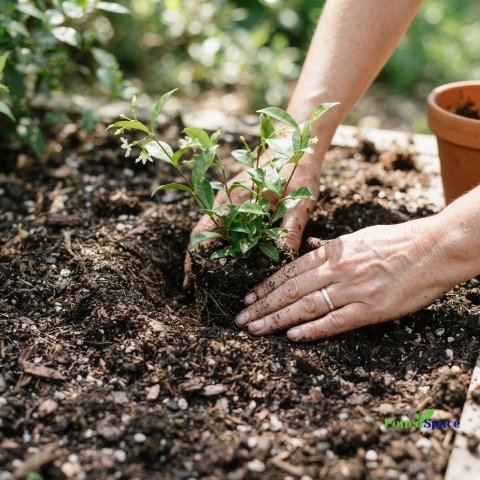
Spring or early fall are the best times to plant, giving the roots time to settle in before extreme heat or cold hits. Dig a hole roughly twice the width of the root ball and about the same depth, loosen the roots gently before placing it in, and backfill with soil. Water it in thoroughly right after planting. If you’re training it up a trellis or fence, position the plant close enough that the new growth can reach the support without much redirection. Space multiple plants about three to five feet apart if you’re covering a longer fence line.
Watering Star Jasmine the Right Way
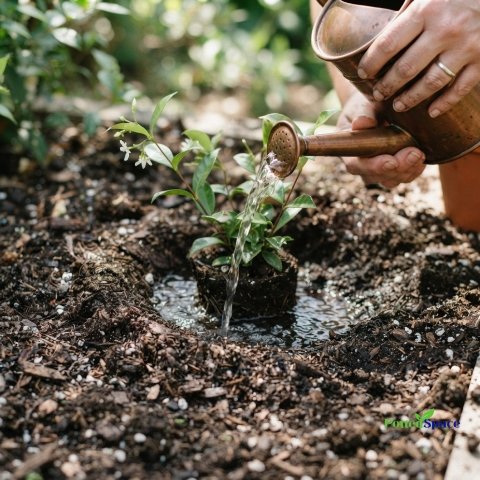
Newly planted star jasmine needs regular watering for the first several weeks to help it establish a strong root system — aim for consistently moist soil, not soggy. Once established, it becomes fairly drought-tolerant and only needs deep watering during extended dry spells. Overwatering is a bigger risk than underwatering with this plant, so let the top couple of inches of soil dry out before watering again. Container-grown plants will need more frequent watering than those in the ground, since pots dry out faster, especially in summer heat.
Feeding and Fertilizing
Star jasmine doesn’t need heavy feeding to thrive. A balanced, slow-release fertilizer applied once in early spring is usually enough to support healthy growth and a strong bloom season. Avoid overfertilizing with high-nitrogen products, since that tends to push leafy growth at the expense of flowers. If your soil already has decent organic matter, you can often skip fertilizing altogether and just top-dress with compost once a year. Established, mature plants are especially forgiving and rarely need much feeding at all.
Training and Supporting the Vine
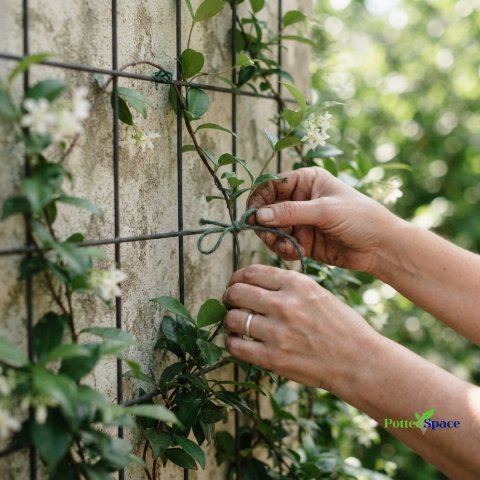
Since star jasmine is a climbing vine, giving it the right support early on makes a big difference. Use a trellis, wire, or lattice structure and gently guide new growth toward it as the plant develops — it will start twining on its own once it makes contact. For fences or walls, horizontal wires spaced a foot or so apart work well for training an even spread. Check on the plant every few weeks during the growing season and redirect any wayward stems before they get too woody to bend easily.
Pruning Star Jasmine
Pruning keeps star jasmine looking full and prevents it from turning into a tangled mess. The best time to prune is right after the main bloom period ends, so you don’t accidentally cut off next season’s flower buds. Trim back overly long or wayward vines, thin out any dense, congested growth to improve airflow, and shape the plant to fit its support structure. A yearly prune is usually enough to keep it looking neat, though established plants can handle a harder cutback if they’ve gotten out of control.
Common Pests and Problems
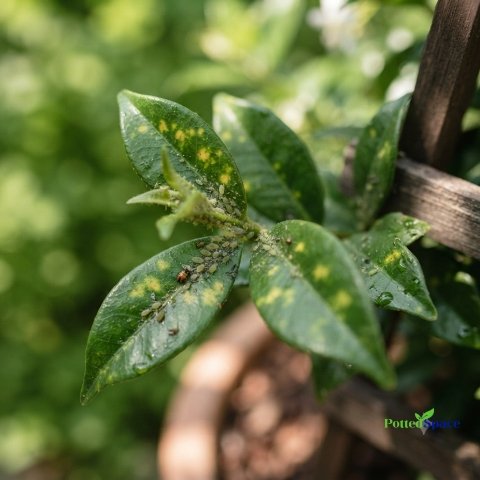
Star jasmine is fairly resistant to serious problems, but it’s not completely immune. Aphids and scale insects occasionally show up, especially on new growth, and can usually be managed with insecticidal soap or a strong spray of water. Yellowing leaves often point to overwatering or poor drainage rather than a pest issue, so check your soil moisture before assuming something’s attacking the plant. Sparse or missing flowers is typically a sign the plant isn’t getting enough sunlight, so consider relocating container plants or thinning nearby foliage that might be shading it out.
Growing Star Jasmine in Containers
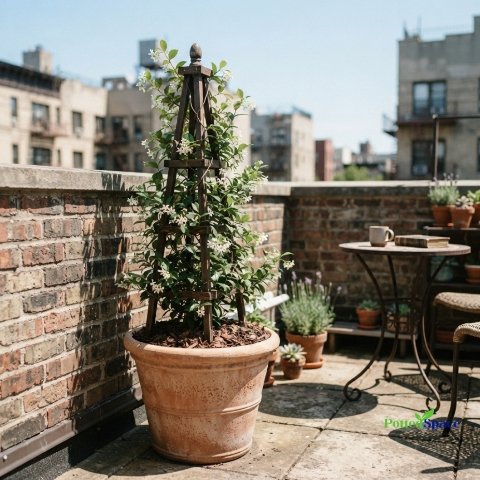
If you don’t have garden space, star jasmine adapts well to pots, making it a great option for balconies, patios, or small courtyards. Choose a container with solid drainage holes and give it a trellis or obelisk to climb inside the pot. Container plants will need more frequent watering and an annual repotting or soil refresh to keep nutrients available. In colder climates, growing in a container also gives you the flexibility to move the plant indoors or to a sheltered spot if a hard freeze is expected.
Winter Care
Star jasmine is hardy in warmer climates and can handle light frost once established, but harder freezes can damage or kill an in-ground plant in colder zones. If you’re in a borderline climate, a layer of mulch around the base in late fall helps insulate the roots. Container-grown plants are more vulnerable to cold since their roots aren’t protected by the surrounding ground, so move pots to a sheltered spot, garage, or indoors if a hard freeze is forecast. Reduce watering during the dormant winter months since the plant’s growth slows down significantly.
Final Thoughts
Star jasmine is one of those plants that gives you a lot for very little effort — evergreen coverage, fragrant blooms, and a graceful climbing habit that works on fences, trellises, or pots alike. Give it decent sun, well-draining soil, and a yearly prune, and it will reward you with a wall of white flowers and a scent that fills the whole yard every summer. Once it’s established, it’s one of the lowest-maintenance vines you can plant at home.
